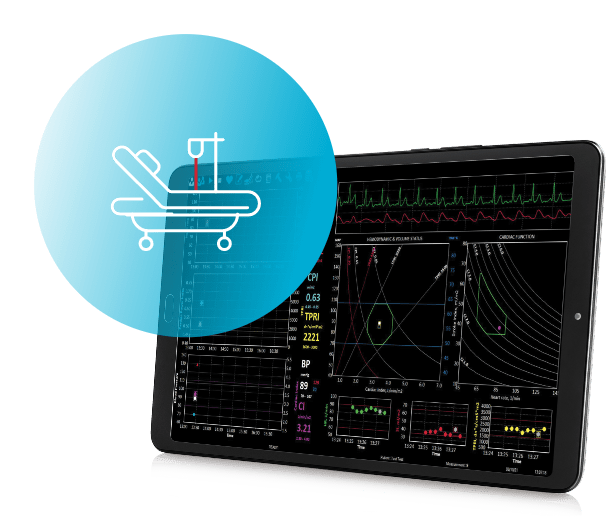
NICaS can assist physicians in determining the patient’s body composition. With NICaS, physicians can also determine the cause of hypertension or hypotension, based on each patient’s objective hemodynamic parameters. These parameters provide the physician with a deeper understanding of the total dynamics that cause patients’ individual hemodynamic status and fluctuations.
Challenges
Assess fluid status and fluid responsiveness.
Monitor and treat hypotensive/hypertensive patients.
Evaluate drug response and drug titration online.
Solutions
NICaS helps reduce the length of hospital stay and/or patient mortality.
Personalized treatment according to individual hemodynamic profiles: Stop guessing what medication to administer.
View trends of the hemodynamic profile on a specially designed screen that is easy to operate and understand.
NICaS helps physicians to be more effective in determining the proper dry weight, fluid volume status and prescriptions. With NICaS, they can prescribe the proper medication that best addresses the specific cause of each condition.
Authors: N. Kofman; A. Rotmansh; E. Kalmanovich Even in the hands of cardiologists trained in performing echocardiographic hemodynamic evaluations, the measurement consistency is relatively…
European Journal of Heart Failure Supplements (2012) UKOverview: Hemodynamic dysfunction is often used as part of the definition for heart failure (HF), predicts an adverse outcome and…
Background: Cardiac Power Index (CPI) is a novel parameter calculated by CI*MAP and is considered to be a reliable indicator of myocardial contractility. Previous studies done by RHC…
Background: Cardiac Power Index (CPI) is a novel parameter calculated by CI*MAP and is considered to be a reliable indicator of myocardial contractility. Previous studies done by RHC…